Australia Is Scrapping the Paper Arrival Card
By BookingClub
You know the moment. The cabin lights come up somewhere over the coast, the crew walks through with a stack of cards, and half the plane starts patting pockets for a pen that doesn't exist. Someone balances the card on a knee. Someone asks to borrow yours. Someone fills the whole thing out and then finds out their partner's card is on the other side of the aisle.
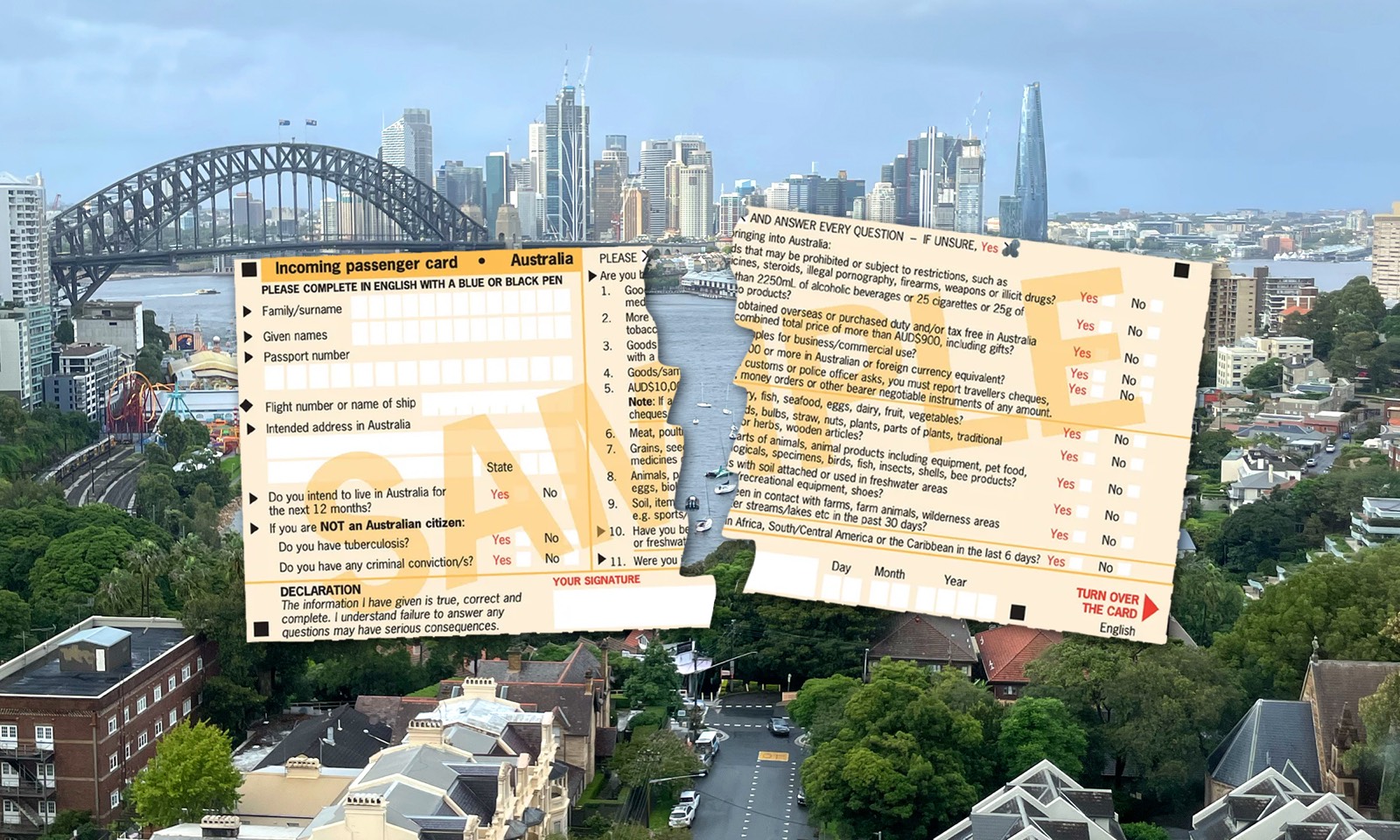
That moment is being retired. The federal government confirmed this week that the paper incoming passenger card, the little orange form Australia has handed to every arriving traveller for decades, is being replaced by a digital version called the Australia Travel Declaration.
What was announced
This wasn't a pilot announcement. The pilot already happened: since October 2024, more than 450,000 passengers on eligible Qantas flights into Brisbane, Sydney and Melbourne have arrived using the digital declaration instead of the paper card. The announcement is that it worked, and it's now going national.
Perth and Adelaide join before the end of 2026. After that, the declaration rolls out to every international airport and seaport in the country in phases over the following 12 to 18 months. The government is putting $56.1 million over four years into modernising arrivals to back it.
Tourism Minister Don Farrell called it "a win for tourists and a win for our tourism operators". The Home Affairs Minister's framing was more practical: the goal is getting people out of the airport and into the country faster.
How it works
The digital declaration asks the same questions as the paper card. The difference is when and where you answer them.
Before you fly: you complete the declaration online up to three days before you arrive. During the pilot this ran through the Qantas app; as the rollout widens it starts as a web form, with more airline apps to follow.
You get a QR code: completing the declaration generates a digital pass. That's your card.
On arrival: the Australian Border Force scans the pass and you keep walking. No pen, no knee-balancing, no holding the plane's collective breath while row 47 hunts for a biro.
What doesn't change
The declaration itself. Australia's customs and biosecurity questions are the same whether they arrive on paper or on your phone, and so are the penalties for answering them creatively. If you're carrying food, plant material, wooden souvenirs or a suspiciously muddy pair of hiking boots, you declare them exactly as before. The biosecurity officers and their very good dogs are not being digitised.
The paper card also isn't vanishing overnight. The rollout is phased, so depending on your airport and airline you may keep meeting the orange card for a while yet. If you're handed one, fill it in. If you did the digital declaration, you won't be.
How to think about it
Australia is late to this and it doesn't really matter. New Zealand already moved its arrival declaration onto your phone, Singapore has done the same, and anyone who has used either knows how much better the last twenty minutes of a long-haul flight feels when there's no paperwork in it.
The honest win here is small and real: one less thing between the aerobridge and the exit doors. You'll fill in the same questions from your couch three days early, land with a QR code in your wallet, and spend the descent looking out the window instead of asking a stranger for a pen. That's the whole upgrade, and it's a good one.